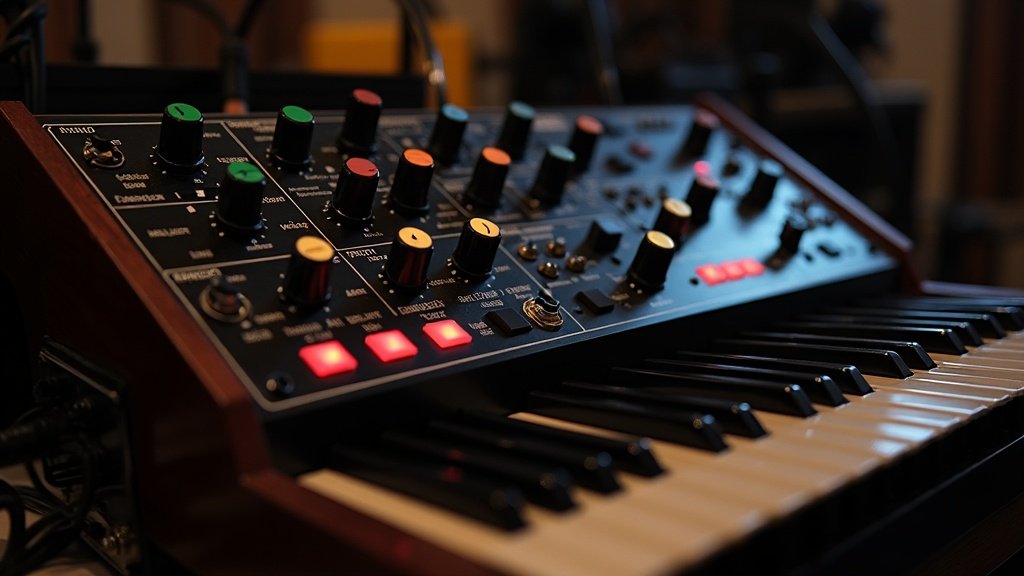
Have you ever wondered how that warm, thick, sometimes gritty classic synth sound is made? At the heart of it all lies subtractive synthesis—a foundational technique in electronic music production. From the warm hum of a Moog to the sleek precision of a virtual synth, subtractive synthesis is everywhere. While its concept may seem simple, it opens up a world of creative possibilities for musicians and sound designers at any level. In this article, I’ll break down what subtractive synthesis is, how it works, why synths are labeled as ‘subtractive,’ and how you can harness its power in your own productions.
What Does Subtractive Synthesis Mean?
Subtractive synthesis is a sound design technique where you start with a harmonically rich waveform (like a sawtooth, square, or triangle wave) and then shape it by filtering out unwanted frequencies. Think of it as sculpting sound: you begin with a dense block of audio and gradually remove parts of it until you’re left with the tone you want. This method is widely used in synthesizers because it gives musicians precise control over the tone, texture, and movement of a sound.
When I use subtractive synthesis, I often start with basic waveforms like sawtooth, square, or triangle. These shapes are packed with harmonics, which means they contain a wide range of frequencies. By running these waveforms through filters, I can boost or cut specific frequency ranges—shaping the sound to fit my creative vision. For example, a low-pass filter might smooth out harsh highs, while a high-pass filter could add clarity by cutting out muddiness. This flexibility makes subtractive synthesis a powerful tool for crafting everything from deep, resonant basslines to shimmering, atmospheric pads.
Why Are Some Synths Called Subtractive Synthesizers?
Synthesizers are labeled as subtractive when their primary method of sound creation involves starting with a harmonically rich waveform (like a sawtooth, square, or triangle wave) and then filtering out specific frequencies to shape the sound. This approach is central to many classic analog synths, such as the Minimoog, Yamaha CS-80, and Roland JP-8000, as well as modern digital synths that emulate this technique. When I see rows of filter knobs, cutoff sliders, and resonance controls, I immediately recognize it as a subtractive synth—because these components are the heart of its sound design.
The filter section is the main giveaway for subtractive synths. These filters shape the timbre by attenuating (rolling off) high frequencies, boosting specific frequency ranges, or fine-tuning the sound through resonance. If a synth doesn’t rely on layering pure tones or playing back samples as its primary method, it’s likely using subtractive synthesis. For example, the Minimoog’s iconic low-pass filter is key to its warm, resonant bass tones, while the Roland JP-8000’s subtractive approach gives it a smooth, synth-like character.
How Subtractive Synthesis Works
Subtractive synthesis follows a simple but flexible signal chain. Understanding these building blocks has allowed me to design sounds from scratch instead of relying only on presets.
This voltage-based control allows for dynamic, real-time sound manipulation, which is a key feature of analog synthesizers. Modern digital synths often emulate this voltage-control behavior, maintaining the same fundamental approach to sound design.
At its core, subtractive synthesis follows a three-step signal chain:
1. Oscillator (VCO)
The oscillator generates the starting waveform. I usually choose from sawtooth, square, or triangle waves because they contain rich harmonics that provide a solid foundation for shaping. Some synths let me layer or detune multiple oscillators to create a fuller, more complex sound. For example, detuning two sawtooth waves slightly can add width and depth to a lead or pad.
2. Filter (VCF)
The filter is the heart of subtractive synthesis. It removes or boosts specific frequencies to shape the sound. The most common type is the low-pass filter, which cuts off high frequencies and lets bassier tones through. Other filter types, like high-pass, band-pass, and notch filters, each offer unique tonal characteristics. A high-pass filter, for instance, can add clarity by cutting out muddiness, while a band-pass filter isolates a narrow frequency range for a more focused sound.
3. Amplifier (VCA)
The amplifier controls the volume and adds the final shape to the sound. With envelope controls, I can define how the sound starts, fades, sustains, and releases when I release a key or button. For example, a short attack and quick decay can create a punchy snare, while a slow release can add sustain to a pad.
Modulation & Effects:
I often use tools like LFOs (low-frequency oscillators) and envelopes to add movement, vibrato, or dynamic variation. Effects like reverb, phaser, or chorus can further enhance the sound by adding space, movement, or texture. For instance, a phaser can create a sweeping, swirling effect, while reverb can give a sound a sense of depth and ambience.
By stacking these components, I create a flexible toolset for crafting basses, leads, pads, and even drum sounds. It’s all about these core components working together to shape the final sound.
A Quick Note on Terminology The “V” in VCO, VCF, and VCA stands for “Voltage Controlled.” In analog synthesizers, each component is controlled by electrical voltage:
- VCO (Voltage Controlled Oscillator): The pitch and waveform change based on voltage
- VCF (Voltage Controlled Filter): The filter’s cutoff and resonance are adjusted by voltage
- VCA (Voltage Controlled Amplifier): The volume is determined by voltage levels
Common Features and Controls in Subtractive Synthesis
Common Features and Controls in Subtractive Synthesis
Exploring a subtractive synth, I find a few controls that pop up over and over. Here’s what I see most frequently and what each one does:
Cutoff Frequency:
Sets where the filter starts attenuating frequencies. Tweaking this makes the sound brighter or darker. For example, lowering the cutoff cuts off high frequencies, resulting in a darker, more muffled tone, while raising it allows more high-end details to pass through.
Resonance (Q):
Pumps up frequencies right at the cutoff point. Turning this up adds a resonant peak at the cutoff frequency, creating a whistling or zippy quality. This is a defining feature of subtractive synthesis and is especially popular in dance music for its punchy, energetic character.
Envelope Generator (ADSR):
Shapes the amplitude and sometimes filter movement over time. I use this to make plucked, percussive sounds or slow, evolving pads. For instance, a short attack and quick decay can create a sharp, snappy sound, while a slow release can add sustain to a pad. Envelopes can also modulate the filter (e.g., a filter envelope that opens up after a note is played) to create dynamic, expressive changes.
LFO (Low Frequency Oscillator):
Adds movement by automatically changing parameters like pitch, filter cutoff, or even volume. This gives sounds vibrato, wobble, or rhythmic pulsing that works great for electronic genres. For example, a “wobble” effect (common in dubstep or trap) is created by modulating the filter cutoff with a low-frequency sine wave, while a vibrato is often a subtle modulation of pitch.
These controls are incredibly versatile, and their interactions (e.g., combining LFOs with envelopes or filters) create the vast range of sounds subtractive synths are known for. Whether you’re crafting a punchy bassline or a lush pad, these tools are essential to your creative process.
Another Quick Terminology Note
- Q (Resonance): A measure of how “sharp” the filter’s peak is. Higher Q creates a more pronounced, resonant peak at the cutoff frequency, often used to add character to sounds.
- ADSR (Attack, Decay, Sustain, Release): The envelope generator that controls how a sound evolves over time.
- Attack: How quickly the sound reaches its peak volume.
- Decay: How quickly the sound fades after the attack.
- Sustain: The volume level the sound holds while a note is held.
- Release: How quickly the sound fades after the note is released.

Practical Example: Subtractive Synthesis in Action
To show how subtractive synthesis works in a real situation, here’s how I would design a classic analog bass sound:
Start with a Sawtooth Wave:
I set my synth oscillator to a sawtooth wave, which is rich in harmonics and has a buzzy edge when played on its own.
Run Through a Lowpass Filter:
I drop the filter cutoff to roll off the upper frequencies, making the tone deeper and warmer. Increasing the resonance (Q) slightly adds a resonant peak at the cutoff frequency, creating a whistling or zippy quality that’s popular in genres like dubstep or trap.
Shape the Envelope (ASDR):
I keep the attack and release short, so the sound is snappy and punchy, like a classic bassline. The sustain is set high to maintain a steady tone while a note is held.
Add Some Subtle Modulation:
Using an envelope to make the filter open quickly and then settle back down creates a slight “wah” at the start of each note. This adds movement and interest, a technique commonly used in electronic music to make basslines more dynamic.
This process is a great example of subtractive synthesis because I’m literally removing (subtracting) frequencies with a lowpass filter while adding character through resonance and modulation. The result is a versatile, punchy bass sound that’s foundational in many genres.
What Does Subtractive Technique Actually Mean?
The subtractive technique involves refining a sound by removing unnecessary or unwanted frequencies from a complex source—such as a sawtooth wave, which contains multiple harmonics. For example, cutting high frequencies with a low-pass filter can make a sawtooth sound more “bass-heavy” or focused, while cutting lows with a high-pass filter can create a brighter, more defined tone. This method contrasts with additive synthesis (which builds sounds from pure tones) or FM synthesis (which uses frequency modulation to create complex textures). Subtractive synthesis is all about sculpting a sound to make it more focused, emotionally resonant, and versatile for mixing—while still leaving room for creative experimentation.
Key Considerations for Subtractive Synthesis
Waveform Selection Matters:
If the starting waveform lacks harmonics (like a sine wave), filters won’t drastically change it. Richer waveforms (e.g., sawtooth or square) offer more flexibility, allowing you to shape the sound dramatically.
Filter Quality and Types Vary:
Analog filters (especially vintage ones) are prized for their warm, resonant character, while digital filters may offer sharper cutoffs or more modes but can sound “clinical.” Exploring different filter types (e.g., low-pass, high-pass, band-pass) unlocks new sonic possibilities.
Modulation Unlocks Creative Potential:
Experimenting with LFOs (Low-Frequency Oscillators) or envelopes can make sounds evolve over time, adding movement and dynamics to your music. For example, a pulsing LFO on a synth pad can create a rhythmic, organic feel.
Signal Chain Order Has an Impact:
On some synths, the order of filters, amplifiers, or effects (e.g., filter before amp or vice versa) subtly shapes the sound. Experimenting with these paths can reveal unique textures or add warmth through distortion.
Pro Tip: While subtractive synthesis has its quirks, these nuances are part of its charm. By understanding them, you’ll gain greater control over your sound and unlock creative possibilities.

Common Challenges in Subtractive Synthesis
When I first started, I ran into a few hurdles::
- Thin Sound: Filtering too aggressively can strip away the higher harmonics that give a sound its body, resulting in a dull or hollow tone. To fix this, I often layer or detune multiple oscillators to restore richness and depth.
- Unwanted Distortion: Cranking up resonance or filter drive can introduce harsh, unnatural distortion. I’ve learned to dial these back or use them sparingly, especially when aiming for a clean, polished sound.
- Overlapping Frequencies: Cutting the wrong frequencies can cause instruments to clash in a mix. For example, if two tracks occupy the same frequency range, they might cancel each other out or sound muddy. Subtractive techniques help carve out space for each instrument, whether in synth design or mixing.
Pro Tip: These challenges are part of the learning curve, but understanding them gives you greater control over your sound. By balancing aggression and finesse, you can unlock the full potential of subtractive synthesis.
Tips for Getting the Best Out of Subtractive Synthesis
If you want to create stronger sounds or learn more quickly, try these strategies:
- Layer Oscillators: Using multiple oscillators—like a square and a saw wave—adds depth and complexity. Slight detuning (e.g., 1-5 cents) creates a “chorus” effect, while layering a sine wave over a sawtooth can brighten the sound. Some synths even let you blend oscillators for richer textures.
- Automate Filter Movements: Set up automation or use an LFO (Low-Frequency Oscillator) to sweep the filter cutoff. This creates dynamic, evolving sounds perfect for pads, risers, or rhythmic sequences. Try automating filter movements to add movement and interest to static tones.
- Explore Filter Types: Experiment with high-pass, band-pass, or low-pass filters to shape the sound’s frequency range. For example, a high-pass filter can emphasize brightness, while a band-pass filter can focus energy on a specific frequency. Don’t forget to tweak resonance settings to add character without over-processing.
Pro Tip: Subtractive synthesis is all about balance—experiment freely, but always listen critically. Layering, automation, and filter experimentation can unlock endless creative possibilities! Take your time and experiment slowly.
Frequently Asked Questions
Here are a few common questions and answers I often hear from people just getting started with subtractive synthesis:
Question: What is a good example of subtractive synthesis?
Answer: A classic example is creating a synth string pad. Start with two slightly detuned sawtooth oscillators (this creates a “chorus” effect), run them through a lowpass filter to smooth out harsh frequencies, and use an envelope with a slow attack and release to create a lush, evolving sound. This technique is used in genres like retro pop, film scores, and ambient music.
Question: Why are certain synthesizers called subtractive?
Answer: These synthesizers are called “subtractive” because their primary method of shaping sound is by removing parts of a harmonically rich waveform (like a sawtooth or square wave) using filters. This focus on filtering defines their “subtractive” label.
Question: What equipment or tools do I need to try subtractive synthesis?
Answer: You don’t need expensive gear—many free apps (like Tone.js or Synth V) or budget software (like Bitwig or Renoise) let you explore subtractive synthesis. The key tools are oscillators, filters, envelope generators, and modulation options (like LFOs). Even basic setups can create professional-sounding results.
Question: How is subtractive synthesis different from other methods?
Answer: Subtractive synthesis starts with a harmonically rich waveform and trims frequencies using filters, while additive synthesis builds sounds by stacking simple waves. FM synthesis, on the other hand, creates new sounds by modulating frequency. Each method offers unique creative possibilities, but subtractive synthesis is particularly versatile for creating warm, organic tones.
Pro Tip: Subtractive synthesis is all about experimentation! Don’t be afraid to tweak filters, detune oscillators, or automate parameters. The more you play, the more you’ll discover how this method can shape your sound.

Final Thoughts
Mastering subtractive synthesis unlocked a world of sonic exploration, transforming how I approach sound design. By fine-tuning oscillators, filters, envelopes, and modulation, I discovered textures and tones that presets alone couldn’t replicate—whether it’s the punch of a bass, the ethereal glow of a pad, or the sharp clarity of a lead. Its versatility and intuitive nature make it a timeless tool for creators across genres, from electronic music to film scoring. With dedication, subtractive synthesis isn’t just a technique—it’s a gateway to boundless creativity. Keep experimenting, and let those knobs be your guide.
Ready to experiment?
Grab a synth plugin or hardware synth and start shaping your own subtractive patches. The world of sound design is waiting!